How Do You Train a Calm Dog for City Apartment Living?

Last Updated: November 21, 2026
Quick Summary
A calm dog apartment setup comes from predictable routines rather than breed. Keep potty breaks, meals and walks on a fixed schedule, give daily exercise in short regular walks, and teach simple cues like sit, down and stay. Desensitize your dog gradually to hallway and neighbor sounds.
Take your dog out within 15 minutes of waking and after every meal and nap.
Plan two or three walks per day, with a 30-minute walk covering basics for many adult dogs.
Practice sit, down and stay in two-to-three-minute sessions several times a day.
Use a city-specific trigger list and start desensitization at volumes the dog can ignore.
Use a camera on a short baseline to find the trigger behind barking.
Need help with daily walks?
Bark West offers personalized 30-minute walks in Park West for $20 each.
Table of Contents
Why Apartment Living Calls for a Calm Dog
Training a calm dog for city apartment living is less about the dog's breed and more about routine, because a calm dog apartment setup depends on predictable days. Apartments bring constant small triggers: hallway footsteps, elevator dings, neighbors' voices through the wall, and other dogs in shared spaces.
Busy professionals who need their dogs to stay steady while they are at work can benefit from a routine built around these principles. The same principles apply whether you walk your dog yourself or hire help. The goal is a dog that rests easily indoors and handles the building with confidence.
Calm starts with three basics:
A predictable schedule for meals, potty breaks and walks
Enough daily exercise to burn off energy
Simple cues that help your dog pause and settle
Set a Consistent Potty and Outdoor Schedule
House-training problems in apartments are often linked to irregular timing. Take your dog out at the same times each day: first thing in the morning, after meals, after naps and before bed.
A dog that knows when the next break is coming feels less anxious, and that predictability alone reduces restlessness at the door in a calm dog apartment.
Take your dog out within 15 minutes of waking
Offer an outdoor break after every meal and every long nap
Use the same spot and a consistent cue word like "go potty"
Reward immediately after the dog finishes outside
Watch out: if accidents happen indoors, clean them with an enzyme cleaner. Ammonia-based cleaners can smell like urine to a dog and encourage repeat spots.
Build a Daily Exercise Routine for Apartment Dogs
A tired dog is usually a calmer dog. Apartment dogs need daily movement, but it does not have to mean hours at the park. Short, regular walks often work better than one long outing.
A good starting point is two or three walks per day, plus a few minutes of play or sniffing. A 30-minute walk each day can cover the basics for many adult dogs, though needs vary by age, size and breed.
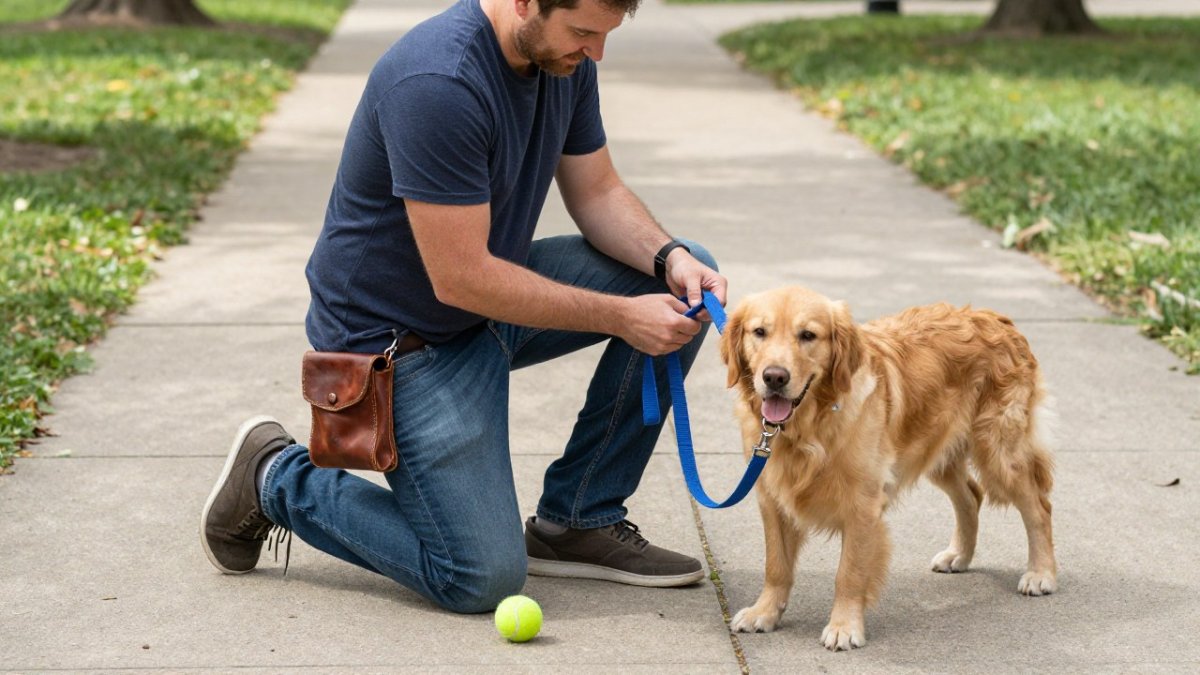
!Calm dog walking on a leash beside its owner along a quiet tree-lined city sidewalk in the morning

(/post/dog-walking-tips-for-busy-professionals) and routines that suit a demanding day. You can read more about [the benefits of daily dog walking for anxious dogs](/post/benefits-of-daily-dog-walking-for-anxious-dogs) and [how long a dog should exercise each day](/post/how-long-should-a-dog-exercise-daily-a-practical-guide) to plan your own routine.
Teach Calm Behavior with Basic Cues and Leash Manners
Basic cues give your dog a clear job when something exciting happens. Sit, down and stay are the most useful for apartment life, because they let your dog pause before going through a door or greeting someone.
Practice these in short sessions, two to three minutes at a time, several times a day. Use treats or praise as rewards.
Sit: lure the nose up and back, then reward once the rear touches the floor
Down: lure from a sit toward the floor, then reward when the elbows touch
Stay: start with one second, then slowly add time and distance
Leash manners matter just as much in shared hallways. If your dog lunges at strangers, see how to stop a dog from lunging at strangers for a targeted fix.
Use Noise Desensitization Training for Hallway and Neighbor Sounds
Apartment noises can startle a dog that is not used to them, and city apartments add a layer most generic guides skip: the trigger is rarely one sound.
Build a city-specific trigger list first. For one week, note every sound that makes your dog lift their head, bark, pace, or move toward the door.
A practical progression for each trigger:
Record or source the sound. Use a phone recording of your own hallway, elevator, or intercom, or a clean sound clip of traffic or a siren. Keep it short, five to ten seconds is enough per repetition.
Set the volume below the reaction threshold. Play it at a level where your dog notices but does not bark, freeze, or leave the room. If they react, the volume is too high; drop it and start again another day.
Pair with a high-value reward. Give a small piece of chicken, cheese, or a favorite toy during the sound, and stop the reward when the sound stops. The sequence matters: sound first, then reward.
Repeat in short sets. Three to five repetitions per session, two sessions a day, is usually enough. Stop before your dog loses interest or reacts strongly.
Raise one variable at a time. Increase volume slightly, or move the speaker closer to the door, or add a second sound, but not all three at once. Taking one small step every two to three sessions usually works better than a big jump.
Generalize to the real world. Once your dog stays relaxed at a moderate volume indoors, practice during a real hallway pass or a real elevator ride at a quiet time of day, with treats ready.
Benchmarks to know you are ready to progress: your dog looks toward the sound but returns to rest within a few seconds, takes treats calmly, and does not bark or pace.
City-specific triggers and how to handle them:
Sirens and traffic: start with a recording at low volume, then practice on a bench set back from a busy street during off-peak hours. Reward calm looking, not just silence.
Delivery workers and knocks: practice a knock-and-treat sequence at the door, then a real knock with a treat tossed away from the door so your dog learns to move away rather than rush it.
Elevator dings and intercom buzzers: pair the sound with a treat at the elevator bank during a quiet time, then ride one floor and reward calm behavior.
Hallway footsteps and neighbor voices: record your own hallway at a busy time, or ask a neighbor to walk past while you reward your dog for staying on their mat.
Watch out: if your dog is already reacting strongly to a sound, barking, lunging, or trying to escape, do not keep playing it at that level. For traffic-specific guidance, read whether you can desensitize a dog to traffic noise.
The table below summarises the steps and benchmarks for noise desensitization training.
Step | What to do | Timing or benchmark |
Record or source the sound | Use a phone recording or clean clip of the trigger | Five to ten seconds per repetition |
Set the volume | Play below the reaction threshold | Dog notices but does not bark or freeze |
Pair with reward | Give a high-value treat during the sound | Stop the reward when the sound stops |
Repeat in short sets | Three to five repetitions per session | Two sessions a day |
Raise one variable | Increase volume, move closer, or add one sound | One small step every two to three sessions |
Generalize | Practice during real hallway passes or elevator rides | Quiet times of day, treats ready |
How to Stop a Dog Barking in an Apartment
Barking is often the first thing neighbors notice, and in an apartment the stakes are higher: a noise complaint can follow quickly.
Start with a short baseline. Set up a camera or a phone on a stand before you leave, and record the first 30 to 60 minutes. Note when barking starts, how long it lasts, and what happens just before it.
Distinguish boredom from distress:
Boredom barking tends to be intermittent, often directed at windows or doors, and stops when the dog has something to do. A puzzle toy or a long-lasting chew usually reduces it.
Alarm barking is triggered by a specific sound or sight, hallway footsteps, a delivery, a neighbor's dog, and stops when the trigger passes.
Separation-related distress shows up as barking that starts within minutes of departure, plus pacing, drooling, destructive behavior near exits, or refusal to eat. This is the case to take slowest, and the one where a certified trainer or veterinary behaviorist is most useful.
Apartment-specific alone-time training, step by step:
Practice calm departures. Pick up your keys, put on shoes, and sit back down without leaving. Repeat until your dog stops reacting to the cues.
Start with seconds, not hours. Leave for 10 seconds, return, and reward calm behavior. Build to 30 seconds, then one minute, then five.
Use a camera to check the threshold. Many dogs are fine up to a certain duration and then begin to bark. That duration is your current ceiling, work just below it.
Add a pre-departure chew or puzzle. Give a frozen stuffed toy or a long-lasting chew right before you leave so the dog associates departure with something good.
Keep arrivals and departures low-key. A calm hello and goodbye is easier on a dog than a big greeting that signals your absence matters.
Break up long days. A midday walk or a dog walker visit reduces the total alone time and gives the dog a rest point.
Noise-complaint prevention:
Use a white noise machine or a fan near the door to soften hallway sounds.
Keep blinds partly closed if street activity sets off barking.
Put a note on your door with your phone number so neighbors can text you before filing a complaint.
If your building has quiet hours, know them and plan exercise and enrichment before them.
Troubleshooting setbacks: if barking increases after a change, a new neighbor, a move, a schedule shift, go back to shorter absences for a few days.
Troubleshooting Setbacks and Planning Your First Week of Training
Progress is rarely a straight line. A dog that settled well one week may react again after a new neighbor moves in or the weather changes. Expect small setbacks and return to the basics.
Track three things each day: how many potty accidents happened, how long your dog stayed calm during a noise session, and how often barking occurred. Patterns will show what needs more work.
A simple first-week plan:
Day 1-2: lock in the potty schedule and two daily walks
Day 3-4: add five minutes of cue practice twice a day
Day 5-6: begin noise desensitization at low volume
Day 7: review your notes and adjust the schedule
If problems persist after several weeks, a certified trainer or your veterinarian can help rule out medical causes and suggest a tailored plan.
Training a calm dog for apartment living takes consistent routines and patience.
Frequently Asked Questions
How long does it take for a dog to adjust to a new apartment?
Most dogs need several weeks to settle into a new apartment, though the timeline depends on age, temperament and how much structure the household keeps. Keep the same feeding, potty and walking times from day one, and let the dog explore one room at a time. Short, predictable routines help a nervous dog learn that the new space is safe, while sudden changes in schedule often slow the process.
How much exercise does a dog need each day when living in an apartment?
Exercise needs vary by breed, age and energy level, so there is no single answer that fits every dog. Many apartment dogs do well with several short walks plus a few minutes of structured play or sniffing each day. Calm dogs often need less intense exercise than high-energy breeds, but they still benefit from daily movement, mental work with puzzle toys, and regular outdoor breaks.
How do I stop my dog from barking when I leave my apartment?
Start by practicing short departures, such as stepping out for a few seconds and returning before the dog barks. Gradually increase the time away, and reward quiet moments when you come back. Leave a puzzle toy or a slow feeder to occupy the dog, and avoid making a big fuss at departures or arrivals, since emotional goodbyes can increase anxiety.

Comments