How to Choose the Right Dog Walking Frequency

Last Updated: November 5, 2026
Quick Summary
The right dog walking frequency depends first on your dog's age and life stage, then on its energy level and temperament. Puppies need several short outings a day, while adult dogs usually do well with consistent daily walks sized to their energy and comfort.
Puppies need several short outings spread through the day.
Adult dogs can handle longer, steadier walks, sized to energy level.
In one cohort, owners most often reported average walks of 16 to 60 minutes.
Watch behavior over several weeks: restlessness suggests more walks, limping suggests fewer.
Build your schedule around the walk times you can reliably hit, including on busy days.
Table of Contents
Start With Your Dog's Age and Life Stage
Your dog's age is the first thing to check when you pick a dog walking frequency. Puppies need short, frequent outings, while adult dogs can handle longer, steadier walks (How Much Exercise Does a Puppy Need? Mental and Physical Exercises). Short, frequent walks are generally recommended during a dog's first few months of life, so young dogs don't get overtired or overwhelmed.
Puppies and adults have very different needs. A young dog is still growing, and its joints and energy levels change fast. Keep walks brief and gentle at first, then build up over time.
Puppies: Several short outings spread through the day
Adolescent dogs: Longer walks, with plenty of play in between
Adult dogs: Consistent daily walks sized to energy level
Senior dogs: Shorter, slower walks that match comfort and mobility
Life stage matters as much as age. A healthy two-year-old and a nine-year-old with stiff joints need different routines, even if both live in the same home.
How Often to Walk a Dog Based on Energy and Temperament
Energy and temperament shape how often a dog should go out. A high-energy herding breed may need two or more outings a day. A calm lap dog may be happy with one.
Walking guidance has moved away from one-size-fits-all rules. Two dogs of the same breed can still need different routines.
Watch how your dog behaves between walks. Restlessness, chewing, or barking at windows often points to too little activity. Sleeping through most of the day may mean the dog is getting enough.
Note your dog's typical energy level at home
Notice how quickly it settles after a walk
Adjust frequency if behavior changes over several weeks
How Long Should You Walk a Dog Each Time
Walk length depends on the dog, but the research gives a useful starting point for setting dog walking frequency and duration together. For a deeper, practical guide to daily exercise length, see How Long Should a Dog Exercise Daily: A Practical Guide. In a cohort of dogs followed up to 15 months of age, owners most commonly reported average walks of 16 to 30 minutes (41%) or 31 to 60 minutes (42%) (Analysis of a cohort of dogs up to 15 months of age).
Duration is only part of the picture. A brisk 20-minute walk can be more tiring than a slow 40-minute stroll. Intensity matters too. A 2024 review found that dog walking sits in the upper range of light activity and the lower range of moderate activity, depending on how intensity is measured (Is dog walking suitable for physical activity promotion?).
Start with a walk length your dog handles well, then add time gradually. Stop if your dog limps, lags, or refuses to keep going.
Building a Daily Dog Walking Schedule Around Your Workday
A workday sets the outer boundary of what is possible, so build the schedule from the times you can reliably hit rather than the ideal routine you wish you could keep. The practical question is not "how many walks should a dog get?" but "how many walks can I actually deliver on my worst week?" Answer that honestly and the routine will hold.

Start With a Time Budget, Not a Walk Count
Add up the real cost of one walk, not just the walk itself. Once you count leashing, elevator or yard time, and the transition back to work, a walk takes more of your day than the walk itself. That matters when you are squeezing walks between meetings.
Morning walk: 20 to 40 minutes before work; the most reliable slot for most owners
Midday break: 10 to 20 minutes for bathroom needs and a stretch; often the first slot to go when work gets busy
Evening walk: 30 to 60 minutes; the best slot for the longest outing of the day
Late-night relief walk: 5 to 15 minutes; useful for puppies and senior dogs
A common pattern is three outings on weekdays and two longer ones on weekends. Consistency of timing often matters more to a dog than the exact number of minutes.
Match Frequency to Your Actual Work Pattern
Different work patterns support different routines. Pick the pattern that fits your week, then adjust walk length before you cut a walk entirely.
In-office five days: Morning and evening walks you handle, plus a midday walker or a doggy daycare day two or three times a week
Hybrid schedule: Longer midday walks on home days, a booked midday walk on office days
Shift work: Anchor walks to your sleep schedule, not the clock; a walk right before your shift and one right after is often more sustainable than a fixed 7 a.m. slot
Travel-heavy weeks: Pre-book recurring midday walks for the whole week rather than scrambling day by day
Watch out: cutting the midday walk entirely on busy days is the most common way house-training and destructive-chewing problems start; a 15-minute relief walk preserves the routine.
Price the Routine Before You Commit
Frequency decisions are budget decisions. Price out the week before you settle on a plan so the routine survives past the first busy month.
Pricing depends on walk length, frequency, and booking format; contact Bark West for current rates and a quote
Three walks a week can suit hybrid workers who handle mornings and evenings themselves
For a fuller breakdown of typical rates, see Average Cost of Daily Dog Walks: 2026 Pricing Guide.
Build a Backup Plan Before You Need It
The routine only works if it survives the unpredictable day. Decide in advance what happens when a meeting runs long or you are sick.
Keep one trusted walker on call rather than searching in the moment
Ask the walker about their cancellation and same-day booking policy
Have a 10-minute indoor play or puzzle-toy fallback for days when no walk is possible
For help handling unpredictable days, see Choosing a Dog Walker for Unpredictable Schedules.
The table below sums up the time slots and work patterns covered in this section, so you can see which walks fit your day.
Walk slot | Typical length | Best for |
Morning walk | 20 to 40 minutes | Most reliable slot before work |
Midday break | 10 to 20 minutes | Bathroom needs and a stretch; often first to go on busy days |
Evening walk | 30 to 60 minutes | Longest outing of the day |
Late-night relief walk | 5 to 15 minutes | Puppies and senior dogs |
Signs Your Dog Needs More or Fewer Walks
Your dog will tell you when the routine is off. Watch for changes in behavior over a few weeks, not a single day.
Signs your dog needs more walks:
Pacing, whining, or constant barking
Chewing furniture or digging
Pulling hard on the leash at the start of every walk
Restless sleep or trouble settling at night
Signs your dog may be getting too much:
Limping or stiffness after walks
Lagging behind or seeming reluctant to go out
Sleeping much more than usual after outings
Heavy panting that lasts long after the walk ends
If you see these signs, adjust gradually. Change one thing at a time and give it two or three weeks to show results. If you notice pain, limping, or sudden changes in appetite or energy, check with your veterinarian.
When a Professional Walker Helps Keep a Consistent Routine
A professional walker earns their fee when the routine would otherwise break, not when it is merely convenient. The clearest signal is a recurring gap: a midday slot you cannot cover, a puppy that needs a bathroom break every few hours, or a high-energy dog that gets destructive on days you work late. If the gap shows up regularly, a walker can help preserve training and reduce behavior problems.
Decide Between Individual and Group Walks
The two formats solve different problems, and the right choice depends on the dog more than the price.
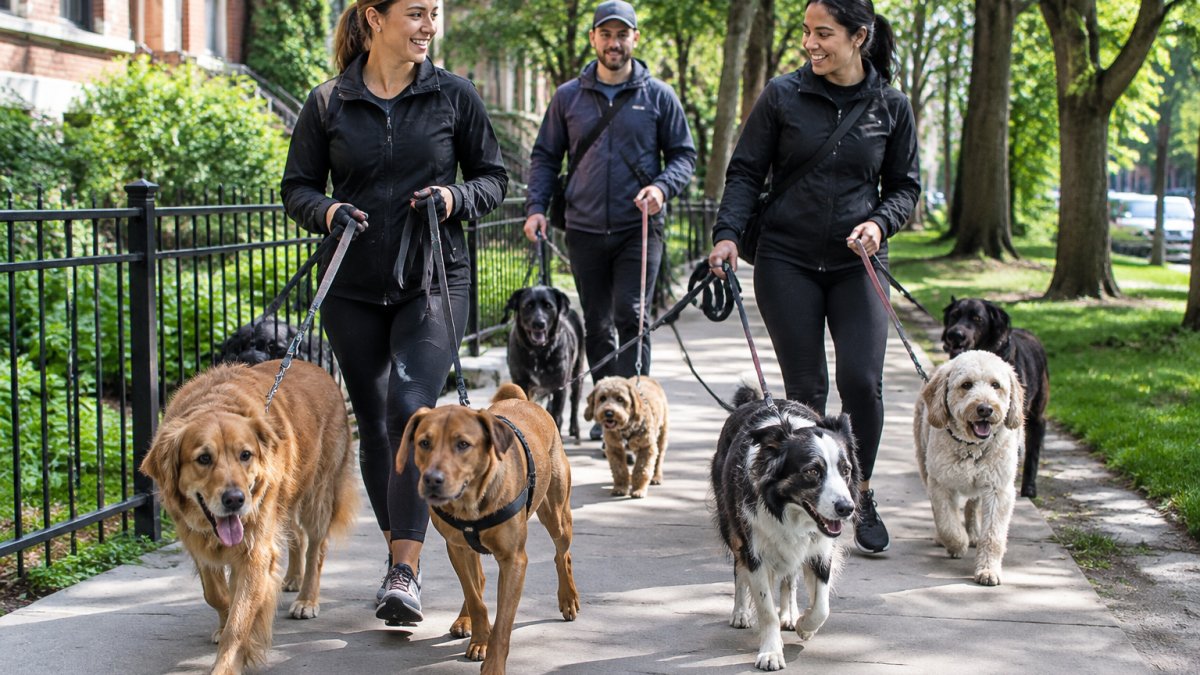
Individual walks suit dogs with anxiety, reactivity, special medical needs, or senior dogs that need a slow pace, and give the walker full attention.
For a fuller comparison, see Group vs Individual Dog Walks: How to Choose.
Questions to Ask Before You Book
A short interview prevents most problems. Ask these before the first paid walk:
Are you insured and bonded, and can you provide proof?
How do you handle a dog that gets injured or slips its collar mid-walk?
How do you introduce yourself to a nervous dog on the first visit?
Watch out: a walker who cannot answer the insurance and emergency questions in specific terms is a risk regardless of price.
How Frequency and Format Affect Cost
Booking frequency changes the effective rate. Recurring bookings and one-off walks may be priced differently; ask Bark West about current rates.
For help deciding between daily and occasional bookings, see Daily vs Occasional Dog Walking Services Compared.
Keep the Routine Consistent Across Handoffs
A walker only preserves the routine if they follow the same rules you do. Share your cues, leash rules, and treat policy with your walker, and ask for updates on each walk so you can spot changes in energy or behavior. Consistency across handoffs is what keeps a dog's routine stable when the owner's schedule is not.
Setting Up Your Walking Routine This Week
You don't need a perfect plan to start. Set up a simple routine this week and refine it as you learn what your dog needs.
Write down your dog's age, energy level, and typical behavior
Map out the times you can reliably walk each day
Pick a starting walk length your dog handles well
Add a backup plan for days when your schedule changes
Track your dog's behavior for two to three weeks
Review your notes at the end of the week. Look for patterns in energy, sleep, and behavior. Then make one small adjustment and keep going.
Frequently Asked Questions
How often should you walk your dog each day?
Most adult dogs do well with one or two walks a day, plus time in the yard or play. Puppies need shorter, more frequent outings, while high-energy breeds often need more. Use your dog's behavior as the guide: restlessness, chewing or pulling on the leash usually means more exercise is needed. Bark West offers flat-rate walks at $20 for 30 minutes, and you can contact the team for a quote on a schedule that fits your week.
How long should a dog walk be?
Walk length depends on age, breed, health and energy. Many owners walk between 16 and 30 minutes, and some walk longer. Short, frequent walks are often recommended for young dogs and dogs that are out of shape. Adjust length gradually and watch how your dog recovers afterward.
Do dogs need a walk every day?
Most dogs benefit from daily walks because they provide exercise, mental stimulation, socialization and time outdoors. Even when a dog gets some activity in the yard, a daily walk supports a steady routine. If your schedule changes, a backup walker can keep the routine consistent. Bark West is available on call 24/7/365 for days when you cannot make it home on time.
Can a professional dog walker help maintain a consistent schedule?
Yes. A regular walker keeps the same times and routine each day, which many dogs find reassuring. A dedicated walker can also serve as a reliable backup when work runs late. Bark West is a one-man operation run by Steve the Dog Guy, fully insured and bonded, and serves the Park West community. Contact the team to talk through your dog's needs and your schedule.

Comments