7 Ways to Build Confidence in Fearful Rescue Dogs

Last Updated: October 29, 2026
Quick Summary
Building confidence in fearful rescue dogs starts with a safe haven and a predictable daily routine, then adds gradual exposure to scary things at a safe distance paired with high-value treats. Stay under your dog's trigger threshold, let the dog choose to engage, and keep sessions short so every experience ends on a win.
Set up a quiet safe haven with a soft bed, water bowl, and a blanket that blocks sightlines.
Keep feeding, walking, and rest times the same each day so the dog stops bracing for surprises.
Reduce exposure distance by roughly 10 percent only after three relaxed sessions in a row.
Keep counter-conditioning sessions short at five to ten minutes and always end on a win.
Call a professional if fear worsens, progress stalls for weeks, or growling, snapping, or biting occurs.
Table of Contents
Start With a Safe Haven and a Predictable Routine
Building confidence in a fearful rescue dog starts with a predictable home base: a quiet corner to retreat to and a daily schedule that never surprises them.

Set yours up with these basics:
A soft bed the dog can sink into
A water bowl within easy reach
A blanket that blocks sightlines on one side
Then keep the routine boring on purpose. Feed, walk, and rest at the same times each day. A dog that knows what comes next stops bracing for the worst.
Never drag a fearful dog out of its safe spot. Let it come to you.
Read Stress Signals and Respect the Trigger Threshold
A trigger threshold is the point where a dog stops thinking and starts reacting. Cross it, and training stalls.
Learn the early stress signals first:
Lip licking and yawning out of context
Whale eye, where the whites of the eyes show
Tucked tail or stiff, frozen posture
These are calming signals. Your dog is asking for space. Give it.
Watch for the moment your dog notices the trigger but stays relaxed, that is the sweet spot for learning.
A common mistake is pushing forward because the dog "seems fine." In practice, that usually means you missed the early signals.
Use Gradual Exposure and High-Value Treats to Build Trust
Gradual exposure means showing a fearful dog a scary thing at a safe distance, in small doses, paired with something good. Do it slowly, and the fear fades. Rush it, and you teach the dog the world really is dangerous.
Measure the threshold instead of guessing at it
"Safe distance" is not a feeling, it is a number you can track. Before each session, pick one observable stress signal as your gauge (lip lick, whale eye, stiff posture, or refusal to take a treat). Then use a simple distance log:
Note the distance at which your dog first notices the trigger but still takes a treat and looks back at you. That is your starting distance.
Work at that distance until your dog offers a relaxed glance-and-dismiss three sessions in a row.
Reduce distance by roughly 10 percent, not more, and repeat.
If your dog stops taking treats or shows your gauge signal, you crossed the line. Return to the last successful distance and end the session there.
Tracking distance in feet, rather than relying on impressions, can make it easier to see progress. A notebook or phone note with date, distance, trigger, and reaction is enough.
Pair every exposure with a treat that beats the fear
Think tiny bits of chicken, cheese, or hot dog, not kibble. The treat must beat the fear. If your dog will take kibble near the trigger, the trigger is not scary enough to be a training opportunity, and if your dog won't take hot dog, you are too close.
Here is the pattern:
Spot the trigger from a safe distance.
Wait for your dog to notice it.
Feed treats the moment your dog looks at the trigger, then looks back at you.
End the session while your dog is still calm.
Repeat daily, inching closer only when your dog stays relaxed.
This is counter-conditioning: changing how your dog feels about a trigger, not just how it acts (The American Veterinary Society of Animal Behavior). Keep sessions short, five to ten minutes. Always end on a win.
Pro Tip Mark a "success line" on your route, a driveway, a lamppost, a crosswalk, and never cross it during a session. Having a physical boundary keeps you honest when your dog "seems fine."
What to do when progress slips
Setbacks are common. If your dog regresses, barking at a trigger it ignored last week, refusing treats, or shutting down, reduce the difficulty and resume at an easier distance.
For treats that actually hold a nervous dog's attention on walks, our guide to calming treats for reactive dogs covers specific picks worth trying.
Here is the distance-log process for gradual exposure sessions.
Step | What to do |
1 | Note distance where dog notices trigger but takes a treat |
2 | Work there until relaxed glance-and-dismiss three sessions in a row |
3 | Reduce distance by roughly 10 percent, then repeat |
4 | If dog stops taking treats, return to last successful distance |
How to Desensitize a Dog to Loud Noises
Sound sensitivity is common in rescue dogs.
Start with the volume at a whisper. If your dog lifts its head or freezes, it is too loud.
Play the sound for a few minutes while your dog eats, chews a bone, or plays. Keep sessions short and calm.
Watch out: flooding a dog with loud noise to "get it used to it" backfires.
Setting Up Sound Recordings and Counter-Conditioning Sessions
Use recordings of the exact sounds your dog fears, such as thunder, fireworks, or traffic. Play them from a speaker at low volume while pairing the sound with treats or a favorite chew.
A simple session plan:
Pick one sound at a time
Set volume just below your dog's reaction point
Pair the sound with food or play for 3-5 minutes
For traffic noise specifically, our article on desensitizing a dog to traffic noise walks through the full process step by step.
Help a Dog Afraid of Cars and Traffic on Walks
A dog afraid of cars needs distance and patience, not a pep talk.
Signs your dog is over threshold near traffic:
Lunging or barking at passing cars
Trying to bolt or pull away
Freezing and refusing to move
If you see any of these, add distance. Cross the street, step onto a lawn, or turn around. There is no shame in a shorter, calmer walk.
Build up slowly. A relaxed walk past one parked car is a win. Next week, try a slow-moving car at a distance. Progress, not perfection.
How to Walk a Dog Afraid of Traffic Safely
Safety comes first with a fearful dog near roads. Use a well-fitted harness and a secure leash, and keep the leash short near curbs. Never rely on a retractable leash for a dog that might bolt.
Walk at off-peak times when traffic is light
Choose routes with sidewalks set back from the road
Keep your own body calm and your voice low
Our deeper guide on managing dog anxiety during walks covers more strategies for tough routes.
Confidence-Building Games for Dogs That Need a Win
Confidence-building games for dogs are simple, low-pressure activities that can help a fearful dog succeed. Each small win builds trust and teaches the dog that trying new things is safe. The dog must choose to engage, never lure or push a fearful dog into a game it is avoiding.
Try these:
Find it: Scatter treats on the floor and say "find it." Nose work calms nervous energy and gives a dog a job it can do perfectly.
Touch: Teach your dog to touch your hand with its nose for a treat. Easy, fast wins.
Go to mat: Reward your dog for standing on a mat. Builds a calm default behavior you can use anywhere.
Keep sessions short and end on a success. Five minutes of easy wins beats an hour of hard work.
The equipment that makes confidence work safer
Front-clip harness: A harness with a front attachment point redirects a dog that startles and bolts, and it takes pressure off the throat, important for a dog that freezes or pulls. A back-clip-only harness can actually reward pulling.
Calming vest or pressure wrap: A snug, body-hugging vest applies gentle pressure that many fearful dogs find settling during novel tasks. It is not a fix, but it can take the edge off so a dog can engage in a game it would otherwise avoid.
Long line: A 15- to 30-foot line lets a fearful dog explore at its own pace in a safe open area while you stay connected. It is the single best tool for letting a dog choose distance during confidence work.
Breed matters more than most owners expect
Fearful rescue dogs are not a blank slate, breed history shapes how they approach novel tasks, and the same game can land very differently depending on what the dog was bred to do.
Herding breeds (border collies, Australian shepherds, heelers) tend to be motion-sensitive and quick to alert. They often excel at the box game and mat work because problem-solving is reinforcing, but they can also fixate on moving triggers. Keep sessions short and reward disengagement.
Guardian breeds (great Pyrenees, livestock guardian mixes) are bred to watch and assess before acting. They may be slower to engage in games and can be suspicious of novel objects. Let them approach on their own timeline and never force interaction with a new toy or box.
Terriers are often bold with objects but sensitive to handling; nose work and find-it games suit them well.
Key Takeaway Confidence work is not about the game, it is about the dog choosing to try. Gear that keeps the dog safe, and a pace that matches its breed history, do more for confidence than any single exercise.
Know When to Call a Professional Trainer or Behaviorist
Call a professional when your dog's fear puts anyone at risk, or when progress stalls for weeks.
Growling, snapping, or biting
Total shutdown on walks
Fear that gets worse, not better
Look for a trainer who uses positive reinforcement and has experience with fearful rescue dogs. Ask about their methods before booking.
A professional trainer may be able to assess your dog's behavior and suggest a plan.
Daily exercise helps too. Our article on the benefits of daily dog walking for anxious dogs explains why routine movement matters so much.
Book a Calm, Customized Walk With Bark West
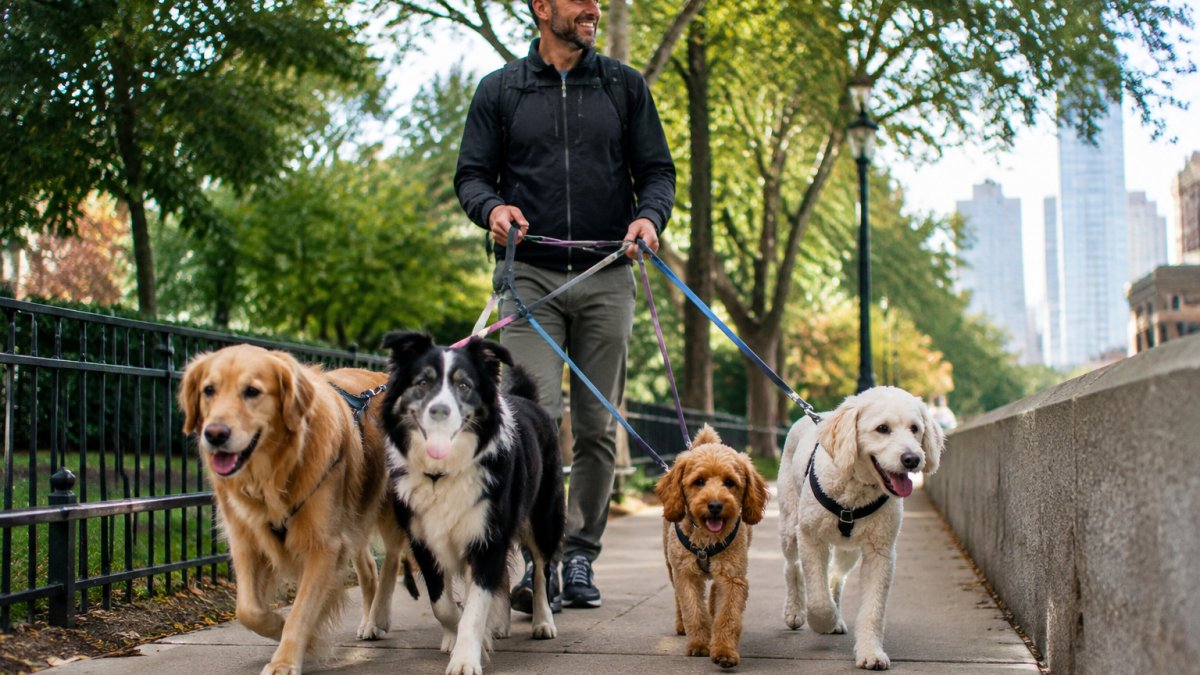
Fearful rescue dogs need more than a quick loop around the block. They need a walker who reads body language, respects thresholds, and keeps things calm and predictable.
That is exactly what Bark West does. Steve the Dog Guy walks dogs in the Park West community and customizes walks to each dog's needs.
Bark West is fully insured and bonded. If your rescue dog needs a calm, consistent walking routine, book a walk with Bark West and give your dog the steady exercise and socialization it needs to thrive.
Frequently Asked Questions
What is the 7-7-7 rule for rescue dogs?
The 7-7-7 rule is a common shelter guideline: roughly 7 days to decompress, 7 weeks to start learning your routine, and 7 months to feel fully at home. Treat it as a loose timeline, not a deadline. Some fearful rescue dogs settle faster, others take longer. Keep early days quiet, avoid crowded outings, and let the dog set the pace.
How do I build a fearful rescue dog's confidence on walks?
Start on quiet side streets at off-peak hours and keep walks short. Let the dog sniff and pause instead of pulling them along, and reward calm behavior with high-value treats. Watch body language for stress signals like tucked tail, lip licking, or freezing, and turn back before the dog hits their trigger threshold. A predictable, low-traffic route repeated daily builds more confidence than a new adventure every day. As the dog relaxes, add one new street or sound at a time.
How can I tell if my dog is too scared to continue training?
Stop if the dog stops taking treats, tries to hide or flee, freezes, pants heavily in cool weather, or refuses to move forward. These are signs the dog has passed their trigger threshold and is in a fear response, not a learning state. End the session calmly, move to a quieter spot, and let the dog decompress. A short successful session beats a long one that ends in fear. Note what triggered the reaction and lower the intensity next time.
Why is my rescue dog afraid of cars, and can it improve?
Many rescue dogs arrive with no positive history with traffic, so engines, brakes, and passing vehicles read as threats. Fear of cars usually improves with gradual exposure: watch traffic from a distance where the dog stays calm, pair each passing car with high-value treats, and slowly close the gap over weeks. Skip busy intersections at first. If the dog panics near any road, work with a professional trainer before walking near traffic again.

Comments