How to Choose the Best Dog Breeds for Active Lifestyles

Last Updated: November 4, 2026
Quick Summary
The best dog breeds for active lifestyles are those whose stamina, coat, and temperament match your routine, climate, and training experience. Most active breeds need 60 to 120 minutes of purposeful exercise daily, and first-time owners should favor trainable, moderate-energy dogs like the Labrador Retriever or Beagle.
Match the breed's coat and build to the weather you actually train in, not its origin story.
Cap weekly mileage increases at about 10% and give a rest day after every hard effort.
Wait until growth plates close, roughly 12 to 18 months, before sustained running.
Keep any dog backpack under roughly 10% of the dog's body weight.
Skip the Malinois and Border Collie as a first dog unless you have serious time and structure.
Table of Contents
Matching Your Routine to the Best Dog Breeds for Active Lifestyles
Choosing the best dog breeds for active lifestyles starts with an honest look at your own schedule, not the dog's reputation. A breed marketed as "high energy" can wreck a calm household, while a moderate breed can thrive with a committed runner.
Dogs who get the right kind of exercise tend to settle faster and behave better on leash. According to Sniffspot's 2026 survey of 9,000+ dog owners, 63.3% of Belgian Malinois owners report their dogs need two or more hours of intense daily exercise.
Below, we break down stamina needs, working breeds, temperament, and the smaller athletes that surprise people, so you can pick a dog that fits the life you actually live.
How Long Should a Dog Exercise Daily? Stamina and Endurance by Breed
Most active breeds need 60 to 120 minutes of purposeful exercise daily, split across walks, runs, and mental work.
Stamina is not the same as energy. A Greyhound sprints hard for 30 seconds and naps for hours, while a Border Collie wants a job that lasts all afternoon.
For a closer look at daily duration by breed, read our guide on how long a dog should exercise daily.
High-Energy Working Breeds for Runners and Trail Running
Many of the strongest running partners come from the working and sporting groups, including Vizslas, German Shorthaired Pointers, Labrador Retrievers, and Dalmatians. These breeds combine endurance with the build to handle mileage, but "runner" is not a single job.

Matching the breed to the run
Vizsla: A natural distance dog with a light, springy gait and a strong desire to stay close. Vizslas are generally capable of several miles of mixed pavement and trail once conditioned, but they can be prone to separation anxiety. They also have thin coats and little body fat, which makes them a poor fit for cold-weather running without a jacket.
German Shorthaired Pointer: All-terrain agility and a high prey drive. GSPs are excellent on varied trail, but that prey drive means a secure harness and a reliable recall are non-negotiable on open ground. They tolerate heat better than cold and need shade and water on summer runs.
Labrador Retriever: The Labrador remains a top pick for active families and is still the most popular dog in 22 individual states according to Visual Capitalist's 2026 breed map. Labs are sturdy, forgiving of inconsistent pacing, and double-coated enough for cool-weather running, but their build makes them heat-sensitive and injury-prone at high mileage if they carry extra weight.
Dalmatian: Built for sustained trotting alongside a carriage, Dalmatians have real endurance and a stubborn streak that tests patience. They are short-coated and handle mild weather well but need a jacket in cold rain.
Climate is a filter, not an afterthought
Active lifestyles vary by climate, and most breed lists ignore it. A double-coated Labrador or a Bernese Mountain Dog can run comfortably in cold weather but overheats quickly above roughly 75°F. A short-coated Vizsla or Dalmatian is the reverse: fine in mild to warm conditions, but needs protection below about 40°F. A common pattern is for owners to pick a breed for its energy and then discover the dog cannot safely run in their local summer or winter.
Gear that changes the run
None of the generic breed lists cover gear, but it is where active owners spend real money and where injuries get prevented. A properly fitted running harness distributes pull across the chest instead of the throat, which matters over mileage. A hands-free leash belt keeps your center of gravity stable on descents. For trail runs, paw protection, booties on hot pavement or rocky scree, and paw wax on ice, prevents the pad injuries that end more running partnerships than lack of fitness does.
Build endurance gradually
Start with shorter trail runs and add distance week by week. A common pattern is to cap weekly mileage increases at about 10% and to give a rest day after every hard effort. Our breakdown of conditioning exercises for high energy dogs shows how to progress safely.
Watch out: pavement temperature matters more than air temperature. If the ground is too hot for the back of your hand for five seconds, it is too hot for paws, and a mid-day summer run can cause pad burns before the dog shows any sign of heat stress.
Temperament, Prey Drive, and Trainability in Athletic Breeds
Temperament decides whether a high-drive dog fits your home, and prey drive and trainability are the two traits that shape daily life most. A dog with strong herding instincts may nip at heels; a scent-driven hound may ignore recall the moment a rabbit crosses the path.
Trainability varies widely. Border Collies and Doberman Pinschers respond sharply to consistent obedience work, while Dalmatians carry a stubborn streak that tests patience. Socialization from puppyhood makes the difference in busy parks and crowded sidewalks.
A common mistake is assuming an athletic breed is automatically easy to train. Physical capability and biddability are separate traits, and the best dog breeds for active lifestyles balance both.
Active Dog Breeds for First-Time Owners
First-time owners should prioritize trainability and moderate energy over raw athleticism. The Labrador Retriever and Beagle top that list because they forgive handler mistakes and adapt to steady routines.
The Labrador is the 2nd most popular breed nationally per PetMD's 2026 popularity ranking, and its eager-to-please nature makes obedience training forgiving.
Skip the Malinois and Border Collie as a first dog unless you have serious time and structure to offer.
Small Athletic Dog Breeds for Hiking
Small athletic dog breeds for hiking deliver surprising endurance in a compact frame, and they are often the better choice for owners who hike technical, rocky, or steep trails where a large dog becomes a liability on descents. The trade-off is that small breeds carry less thermal mass, so climate and gear matter more, not less.
Breeds that hold up on trail
Brittany: A spaniel in a smaller package with exceptional speed and agility. Brittanys adapt to varied terrain and are light enough to scramble over roots and rock without the joint stress a heavy dog absorbs. They are high-drive, though, and need a real job on the trail rather than a slow stroll.
Beagle: Holds a steady pace for hours and has the sociable temperament that makes group hikes easy. The catch is scent drive: a Beagle on an open trail will follow its nose past recall, so a secure leash or a long line is essential.
Jack Russell Terrier: Compact, fearless, and built for rough ground. JRTs handle mileage well for their size but have a strong prey drive and a tendency to overdo it, so watch for signs of fatigue before the dog admits it.
Miniature American Shepherd: A herding breed in a small body with real stamina and biddability. They are among the more trainable small athletes and do well on repeated routes, but they need mental work as much as miles.
Small does not mean low-maintenance
Small breeds still need joint health attention on rocky trails, and a dog carried for the last mile is not building fitness. A common pattern is for owners to overestimate what a small dog can carry, both in body weight and in pack weight. Keep any dog backpack under roughly 10% of the dog's body weight, and less for puppies and seniors.
Climate tolerance in a small frame
Small breeds lose heat faster and gain it faster than large ones. A short-coated Jack Russell or Beagle is comfortable in mild weather but needs a coat in cold rain, while a double-coated Miniature American Shepherd handles cold better but overheats on exposed summer climbs. On desert or high-altitude hikes, plan water and shade stops more frequently than you would for a Labrador, and check paw pads on hot rock.
Life-stage caveats
Puppies should not do sustained high-impact hiking until growth plates close, which for most small breeds is around 10 to 14 months. Seniors do better on shorter, softer loops with more rest.
Watch out: a small dog on a steep descent is at real risk of shoulder and knee strain from repeated jarring, so shorten the downhill sections and consider carrying the dog on the roughest stretches rather than pushing through.
Signs of an Under-Exercised Dog and When to Get Help
An under-exercised dog shows it through destructive chewing, pacing, excessive barking, and pulled leash walks. These signals point to pent-up energy, not disobedience.
A sedentary lifestyle creates a feedback loop: the dog acts out, the owner restricts activity, and behavior worsens.
For a fuller list, see signs your dog needs more exercise and our breakdown of what happens if a dog is under-exercised.
Booking a Daily Walker for Your Active Dog
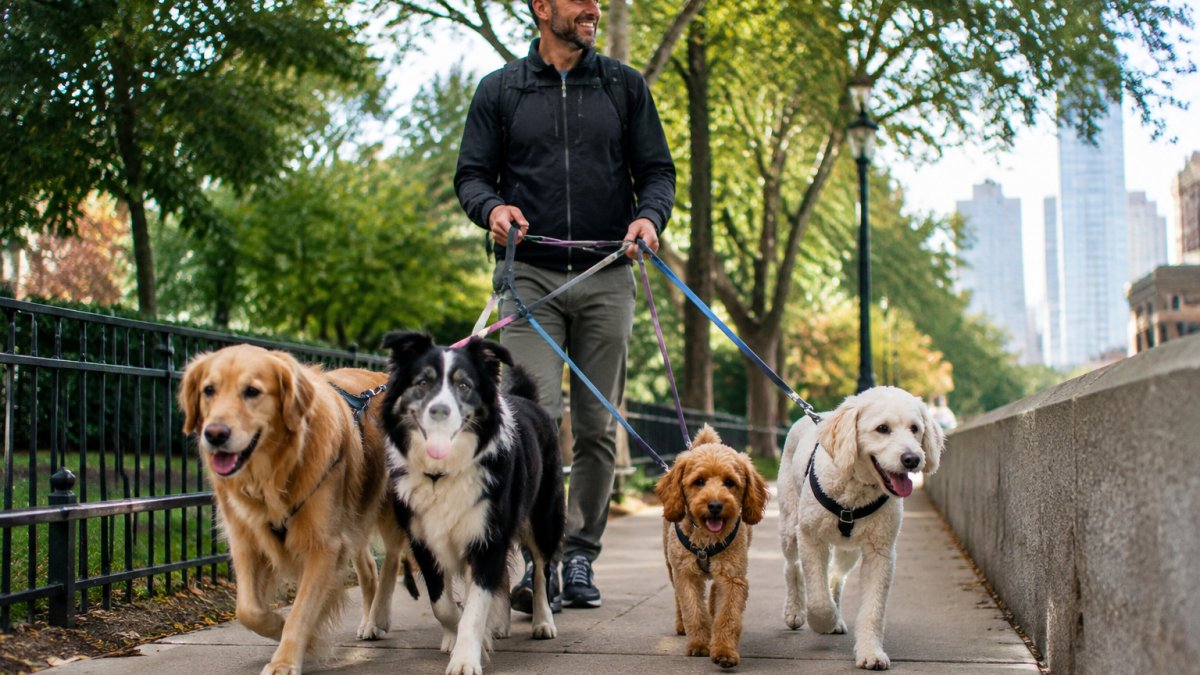
A professional walker fills the gap when work runs long and your high-energy dog still needs a real workout. Consistency matters more than occasional long adventures.
Bark West offers a flat-rate 30-minute walk within the Park West service area, with 24/7/365 on-call availability for unpredictable schedules.
Situation | Best Option | Why It Works |
Predictable 9-to-5 | Daily scheduled walk | Builds routine and steady fitness |
Unpredictable travel | On-call backup walker | Covers last-minute schedule changes |
Anxious or reactive dog | Solo customized walk | Reduces stress and overstimulation |
High-stamina breed | Longer or split sessions | Meets daily endurance needs |
Ready to keep your active dog moving? Book a professional dog walker in Lincoln Park and give your dog the exercise and socialization it needs.
Frequently Asked Questions
What is the most active dog breed?
The Belgian Malinois tops most activity rankings. German Shorthaired Pointers, Vizslas, Border Collies, and Australian Shepherds land in the same tier. These active dog breeds were bred for work that lasted all day, so a single walk around the block does not tire them out. Expect to build running, hiking, or dog sports into your schedule before you commit.
How long should a dog exercise daily if I work full time?
It depends on the breed. High-stamina working breeds often need 90 minutes to two hours of real exercise, while moderate breeds like Beagles and Labrador Retrievers do well with 60 minutes split into two sessions. If your job keeps you out of the house, a midday walk covers the gap. Bark West offers a flat rate of $20 for a 30-minute walk in Park West, with 24/7/365 on-call availability, so your dog gets outdoor time even when meetings run long.
Are there small athletic dog breeds for hiking?
Yes. The Brittany is a compact bird dog with speed and agility that handles trails well, and the Beagle has the stamina for long, steady walks. Small athletic dog breeds for hiking still need proper conditioning, joint care, and paw protection on rough ground. Build distance gradually and check with your vet before taking a puppy on long routes. Size does not equal low energy: a Brittany will outrun many larger dogs on a climb.
What are the signs of an under-exercised dog?
Common signs of an under-exercised dog include destructive chewing, pacing, excessive barking, digging, and ignoring commands they already know. Some dogs gain weight or seem restless at night. Herding breeds may start nipping at heels. If your schedule is the cause, adding a consistent daily walk helps. Bark West customizes each walk to your dog's needs and can act as a reliable backup when work travel or late meetings interrupt your routine.
Your dog's energy does not pause when your calendar fills up. Bark West keeps active dogs exercised with flat-rate 30-minute walks, 24/7/365 on-call availability, and walks customized to each dog's temperament. Get started with Bark West and give your dog reliable daily exercise, fresh air, and socialization, even on your busiest days.

Comments