How to Exercise Senior Dogs Safely at Every Age

Last Updated: November 1, 2026
Quick Summary
Safe exercise for senior dogs means adjusting activity type, length, and intensity to match an older dog's joints, muscles, and stamina. Keep sessions gentle and frequent, change only one variable at a time, and give your dog at least a week at a new level before changing another. Stop at the first warning sign and check recovery the next morning.
A healthy, active senior can do two 15-minute walks daily plus a 10 to 15 minute sniff walk.
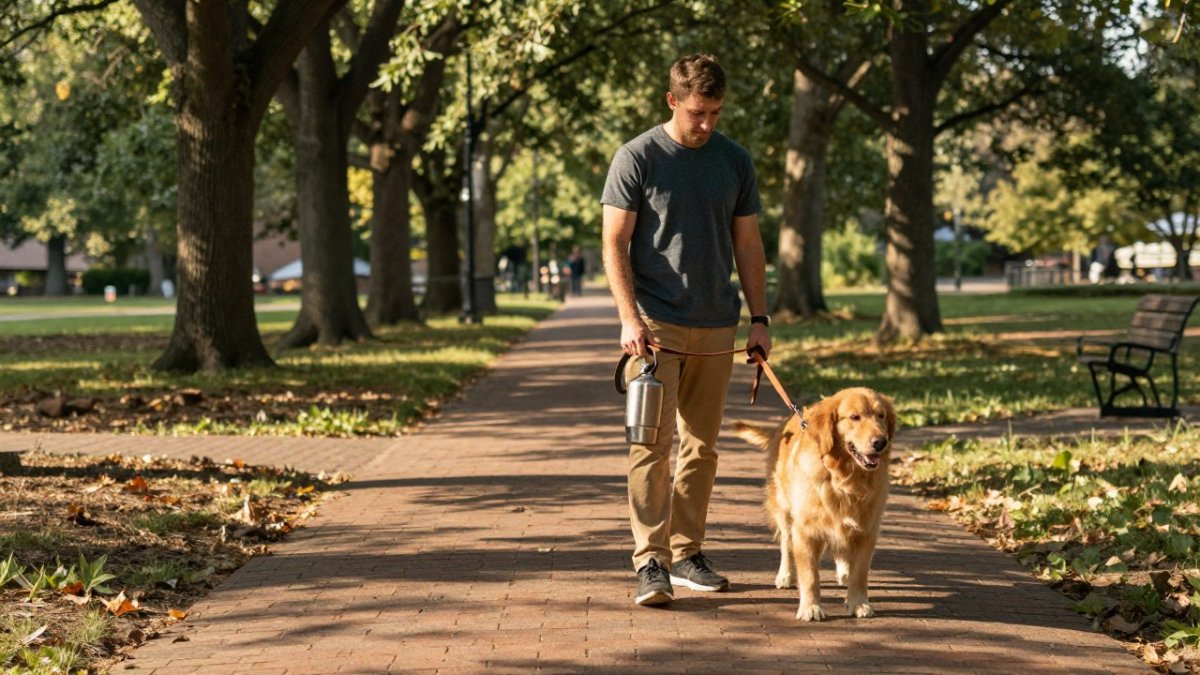
Stiff or slow starters do best with three 10-minute walks daily on grass or another soft surface.
Your dog should breathe through the nose while walking; open-mouth panting on a mild day means slow down.
Stop exercise for heavy panting, wobbling, limping, or lagging, then rest in a cool spot and offer water.
Call your vet the same day for limping that lasts past 24 hours or refusal to bear weight on a limb.
Table of Contents
Why Safe Exercise Matters for Senior Dogs
Safe exercise for senior dogs is the practice of adjusting activity type, length, and intensity to match an older dog's joints, muscles, and stamina. It keeps aging dogs mobile and lean without the strain that causes injury. The difference between a stiff dog and a limber one usually comes down to routine.
Age changes the body. A 2022 study in Age and Physical Activity Levels in Companion Dogs found that older dogs were less active than younger dogs, and that larger dogs tended to stay more active than smaller ones.
That drop in movement matters. Less activity means weaker hindquarters, stiffer joints, and poorer balance. The goal is not to push a senior dog hard. It is to keep the dog moving gently and often.
Movement protects joint health and muscle strength. It also feeds brain activity through sniffing and exploring. Skip it, and a senior dog loses conditioning fast.
How Long to Walk a Senior Dog Each Day
Watch your dog, not the clock.
The right length depends on the individual condition. For a broader daily exercise-duration guide to calibrate how much walking is appropriate, see How Long Should a Dog Exercise Daily: A Practical Guide. A fit, healthy older dog can often handle more. A dog with arthritis or heart issues needs less. Use the framework below as a starting point, then adjust based on what you observe.
A Simple Dosage Framework
Think in three variables: duration, frequency, and intensity. Change only one at a time, and give your dog at least a week at a new level before changing another.
Healthy, active senior: two 15-minute walks daily, plus one sniff walk of 10 to 15 minutes. Total 40 to 45 minutes.
Stiff or slow starter: three 10-minute walks daily, on grass or another soft surface. Total 30 minutes.
Recovering or low stamina: four to five 5-minute walks daily, with rest between. Total 20 to 25 minutes.
Arthritis or joint disease: two 10-minute walks on flat, soft ground, plus indoor range-of-motion work. Avoid stairs and slick floors.
Heart disease or respiratory compromise: short, slow walks of 5 to 10 minutes at a pace where your dog can walk and breathe without gasping. Stop at the first sign of heavy panting.
Post-surgical recovery: follow the veterinary discharge plan exactly; typically this means leash-only, flat-surface walks of 5 minutes or less, several times daily, increasing only with veterinary approval.
Intensity Cues You Can Read in Real Time
Duration matters less than effort. Use these cues to judge intensity during a walk:
Talk test: your dog should be able to walk while breathing through the nose. Open-mouth panting on a mild day is a sign to slow down or stop.
Pace: a relaxed, steady trot is fine. A dog that surges ahead and then lags is oscillating between too much and too little.
Gait: watch for a shortened stride, a head bob, or a hip swing that appears only when tired. Those are early fatigue signals.
Recovery: after a walk, your dog should be back to normal breathing within a few minutes and willing to move around the house. A dog that lies down and stays down for an hour did too much.
How to Progress Safely
Progression should be slow and one-dimensional. Progression should be slow and gradual.
When to Skip the Clock Entirely
Some days call for less, such as hot weather or a flare-up. On those days, swap a walk for indoor nose work or a hallway stroll.
Low-Impact Exercises for Older Dogs
Low-impact exercise is movement that spares the joints while still building strength and stamina. For older dogs, that means soft surfaces, gentle pace, and no jumping or sharp turns. Softer surfaces such as grass, dirt, or sand can cushion the joints.

Short, Frequent Walks and Sniff Walks
Sniff walks are slow walks where the dog sets the pace and stops to smell everything.
Keep the walking pace easy. Let your dog lead. Ten minutes of sniffing can do more for a senior dog than a fast mile.
Swimming and Water Safety
Swimming can be a low-impact option for some older dogs, since water supports the body.
Water safety comes first, though. Use a dog life vest and keep sessions short. Watch for shivering or heavy panting, and stop.
Gentle Play and Gradual Inclines
Gentle play keeps a senior dog sharp and happy. Try soft tug, slow fetch on flat grass, or a food puzzle. Avoid rough wrestling and hard landings.
Mild, gradual inclines can add gentle challenge. Skip steep terrain.
Indoor Exercises for Senior Dogs
Indoor exercise keeps a senior dog moving when weather, heat, or bad footing rules out a long walk. It also works the brain, which matters as much as the body. Try these:
Sit to Stand Exercise for Senior Dogs | Strengthen Weak Back Legs & Improve Mobility | Stronger Dogs
Canine Health Hub
Nose work: hide treats around a room and let your dog search.
Puzzle games: food puzzles and snuffle mats build mental stimulation.
Hallway walks: short leashed walks down a carpeted hall.
Balance work: have your dog stand on a cushion for a few seconds.
Gentle stretching: slow, guided stretches for flexibility.
For more game ideas, browse our list of indoor exercise games for dogs.
Signs a Dog Is Overexerted and How to Respond
Stop exercise if a senior dog shows heavy panting, wobbling, limping, or lagging behind. Also watch for a glazed look, reluctance to move, or a sudden slowdown.
Response matters more than the warning itself. Stop activity and let the dog rest in a cool spot. Offer water. Check the paws and joints. If limping or stiffness lasts more than a day, call your vet.
A common mistake is pushing a dog that seems "fine." Older dogs hide pain well. Watch the day after exercise too, since soreness often shows up later. Comparing these signals with signs your dog needs more exercise helps you judge the right balance.
Use the checklist and thresholds below.
During-Exercise Checklist
Scan for these while you are still out. Any one of them is a reason to end the session and head home at a slow pace:
Respiratory: open-mouth panting that does not settle within 2 to 3 minutes of stopping, or panting on a cool day.
Gait: new limp, head bob, shortened stride, or a back leg that drags or crosses under the body.
Posture: hunched back, tucked belly, or a tail held low and stiff.
Behavior: lagging behind, lying down mid-walk, refusing to continue, or looking back toward home.
Neurologic: wobbling, knuckling over on a paw, or a sudden change in awareness.
Next-Day Recovery Check
The day after a harder session is when overexertion usually shows. Run this check before the next walk:
Rising: does your dog get up from rest without a pause or a groan?
First steps: is the first minute of walking stiffer than usual, and does it loosen within a few minutes?
Stairs: will your dog use stairs normally, or is it hesitating on the first step?
Appetite and water: normal intake, or reduced?
Interaction: does your dog greet you and seek attention as usual?
When to Call the Vet
Call your veterinarian the same day if you see any of the following:
Limping that does not resolve within 24 hours.
Refusal to bear weight on a limb.
Panting at rest, or panting that continues long after activity stops.
Collapse, fainting, or a seizure.
Vomiting, diarrhea, or refusal to eat after exercise.
A sudden change in gait that persists into the next day.
Watch Out Heat matters more for senior dogs. Flat-faced breeds, thick-coated breeds, and dogs with heart disease overheat faster. Walk in the early morning or evening, test pavement with the back of your hand for 5 seconds, and carry water on every outing.
Log It, Don't Guess
A simple log turns vague impressions into a pattern. Note the date, activity, duration, and a one-word recovery rating (easy, normal, stiff, lame) for the next morning. After two to three weeks you will see which activities your dog tolerates and which ones reliably produce a stiff day. That log is also the most useful thing you can bring to a vet visit.
Key Takeaway Stop at the first warning sign, check recovery the next morning, and call the vet for anything that lasts past 24 hours. A written log makes the pattern obvious and the vet conversation concrete.
Vet Screening and Condition-Specific Exercise Plans
Consult your vet before starting or changing an exercise plan for a senior dog.
Ask your vet for a plan built around your dog's condition.
Progression should be slow. Track how your dog recovers, and adjust.
Building a Weekly Routine for Your Senior Dog
Here is a sample week:
Day | Activity | Duration | Focus |
Monday | Short sniff walk | 15 min | Mobility |
Tuesday | Indoor nose work | 10 min | Brain activity |
Wednesday | Gentle walk on grass | 20 min | Muscle strength |
Thursday | Rest and stretching | 10 min | Flexibility |
Friday | Short walk plus gentle play | 15 min | Balance |
Saturday | Swimming or gradual incline | 15 min | Core stability |
Sunday | Easy sniff walk | 10 min | Recovery |
Adjust the plan to your dog's energy. Some weeks call for less. The key is regular movement with rest built in.
Setting Up a Safe Exercise Schedule with Bark West
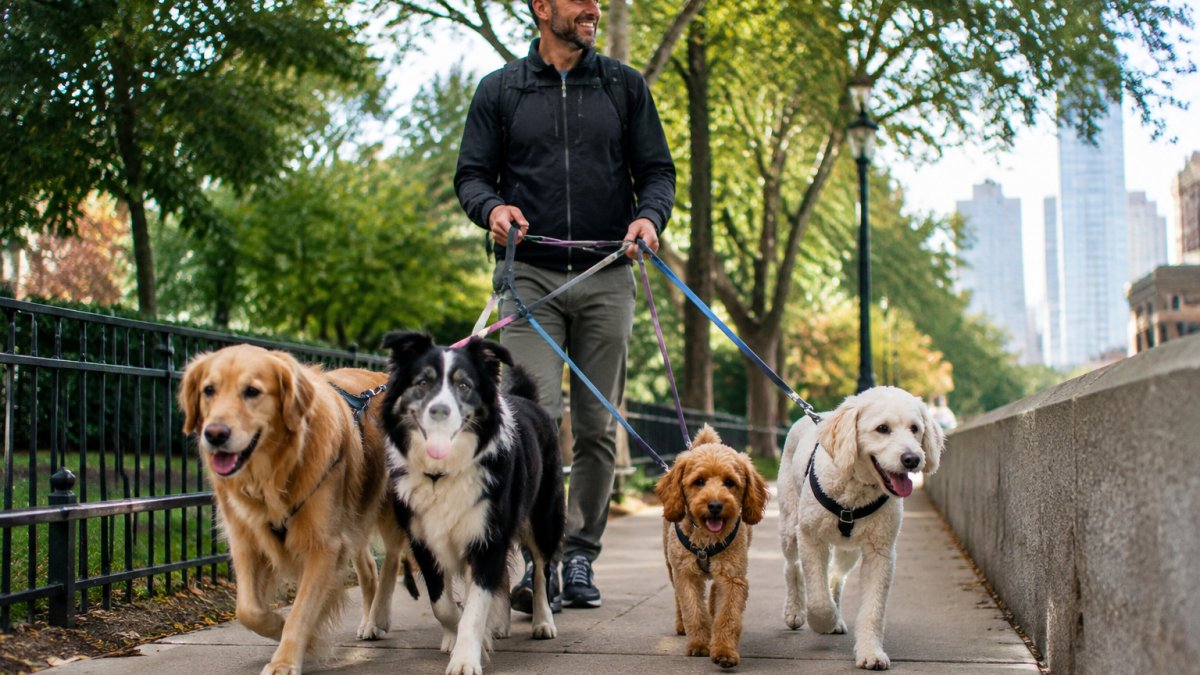
We walk dogs in the Park West community, and we build each walk around your dog's pace and needs. See My Services for the on-demand walking option that can carry out the senior dog exercise plan.
Bark West is on call 24/7/365, so a backup walk can be arranged when work runs late. For current prices and a quote, visit the Bark West website. You can also review Plans & Pricing to see plan options before booking.
Steve customizes every walk to your dog's individual needs.
Frequently Asked Questions
How much exercise does a senior dog need each day?
Your dog's breed, weight, and health conditions matter more than a fixed number, so adjust the total based on how they move and recover the next day.
What are safe low-impact exercises for older dogs?
Short, frequent walks on grass, dirt, or sand are the foundation. Softer surfaces can reduce impact on joints. Add gentle play, slow walks up gradual inclines, and supervised swimming if your dog tolerates water. Indoor options like nose work and puzzle games keep senior dogs moving and thinking without jarring their joints. Skip steep terrain, hard sprinting, and repetitive jumping.
How can I tell if my senior dog is getting too much exercise?
Watch for heavy panting that lingers after the walk, stiffness the next morning, reluctance to rise, limping, or lagging behind on a route they used to handle easily. A dog that seems stiff or tired after a walk needs a shorter or slower session next time. If these signs repeat, talk to your vet about a condition-specific plan. Recovery time is the clearest signal: a senior dog should be back to normal within a few hours, not a full day.
Should I exercise my senior dog if they have arthritis?
Yes, but with a vet-approved plan. Keep sessions short, choose soft surfaces, and warm up with a slow sniff walk before any incline. Stop if your dog stiffens or refuses to move, and ask your vet whether swimming or indoor exercises fit better than walks.
Your senior dog needs gentle, steady movement, and that takes consistency you may not always have. Bark West makes it easy with customized walks, 24/7/365 availability, and flat-rate pricing built for busy owners. Get started with Bark West and keep your older dog moving safely, one walk at a time.

Comments