How to Handle Unpredictable Work Schedules With Pets

Table of Contents
Why Unpredictable Work Schedules Disrupt Your Pet's Daily Routine
How Schedule Changes Affect Pets
Why Predictable Routines Help Pets Feel Secure
How Long Can a Dog Be Left Alone? Setting Realistic Limits
Age and Species Matter: Puppies, Adult Dogs, Senior Pets, and Cats
Building a Dog Walking Schedule for Busy Owners
Gradually Adjusting Feeding and Activity Times
Keeping Familiar Parts of the Daily Routine
Hiring a Dog Walker for an Unpredictable Work Schedule
Creating a Dog Care Backup Plan for Last-Minute Changes
A Decision Tree for Genuinely Unpredictable Shifts
Backup Care Options and Budget Tradeoffs
Managing Separation, Exercise, and Enrichment When You Work Late
Species- and Age-Specific Enrichment
Recognizing Stress and Behavior Changes
A Simple Welfare Log
When to Seek Professional Help
Conclusion
Frequently Asked Questions
Last Updated: October 7, 2026
Why Unpredictable Work Schedules Disrupt Your Pet's Daily Routine
Dogs and cats are creatures of habit. When your work schedule shifts without warning, their whole day gets scrambled, the core challenge of handling unpredictable work schedules with pets.
Pets on steady routines settle faster, sleep better, and handle alone time with less stress.
An unpredictable work schedule is any job pattern where your start, end, or location changes week to week. Think rotating shifts, on-call weeks, or sudden travel.
The problem isn't the change itself. It's the not-knowing.
How Schedule Changes Affect Pets
Pets track time through daily events, not clocks. Feeding, walks, and play are their anchors. Move those anchors, and you get real fallout:
Whining or pacing before you normally leave
Accidents indoors after months of clean records
Skipped meals or food guarding
These are signs of stress, not bad behavior. The American Veterinary Medical Association's pet behavior resources notes that sudden routine changes are a common trigger for anxiety in dogs and cats.
Why Predictable Routines Help Pets Feel Secure
Predictability tells your pet what happens next, lowering stress hormones and keeping behavior steady. You don't need a perfect schedule, you need a reliable one.
Even a loose routine helps when it hits the same beats:
Morning potty break
Midday walk or play session
Evening meal and wind-down
Keep those beats consistent, and your pet copes with the rest of the chaos far better.
Key Takeaway Your pet doesn't need a rigid timetable. They need the same key events in roughly the same order, every day.
How Long Can a Dog Be Left Alone? Setting Realistic Limits
Most adult dogs can hold it for 4 to 6 hours, but 8 or more hours alone pushes many into distress. Puppies, seniors, and some breeds have much shorter limits. So how long can a dog be left alone? It depends on age, health, and training. Use this as a guide:
Pet | Comfortable Alone Time | Notes |
Puppy (under 6 months) | 1-2 hours max | Needs frequent potty breaks |
Adult dog | 4-6 hours | Some handle 8 with a midday break |
Senior dog | 2-4 hours | May need more bathroom trips |
Adult cat | 8-12 hours | Needs food, water, clean litter |
Cats handle alone time better than dogs, but still need daily interaction, a bored cat develops its own stress behaviors.
Age and Species Matter: Puppies, Adult Dogs, Senior Pets, and Cats
A puppy can't hold their bladder like an adult dog, so leaving one for a full workday sets them up to fail. Senior pets need more frequent potty breaks and gentler exercise, while cats are more independent but still crave routine and play. Match your plan to your pet, not a generic rule, a dog walker who understands your pet's age and needs makes this easier.
Building a Dog Walking Schedule for Busy Owners
The best dog walking schedule for busy owners is built around fixed anchors, not fixed times. Pick two or three non-negotiables and protect them whatever your shift looks like.

Here's a simple framework we recommend:
Anchor 1: Morning potty break and breakfast, same time daily
Anchor 2: Midday walk, even if the exact time shifts
Anchor 3: Evening meal and play, within a one-hour window
Everything else can move. These three can't.
Gradually Adjusting Feeding and Activity Times
Don't flip your pet's schedule overnight. Shift feeding and walk times by 15 to 30 minutes over several days so their body clock catches up, the same approach trainers use for daylight saving changes. If your shift rotates weekly, pick a schedule that works for the whole rotation and stick to it. Consistency beats perfection.
Keeping Familiar Parts of the Daily Routine
Familiar routines are your pet's comfort zone. Keep the parts that don't depend on your work hours, the same walking route, feeding spot, and bedtime ritual. Small constants carry weight.
Pro Tip Leave a worn t-shirt in your pet's bed when you leave. Your scent can ease separation stress during longer absences.
Hiring a Dog Walker for an Unpredictable Work Schedule
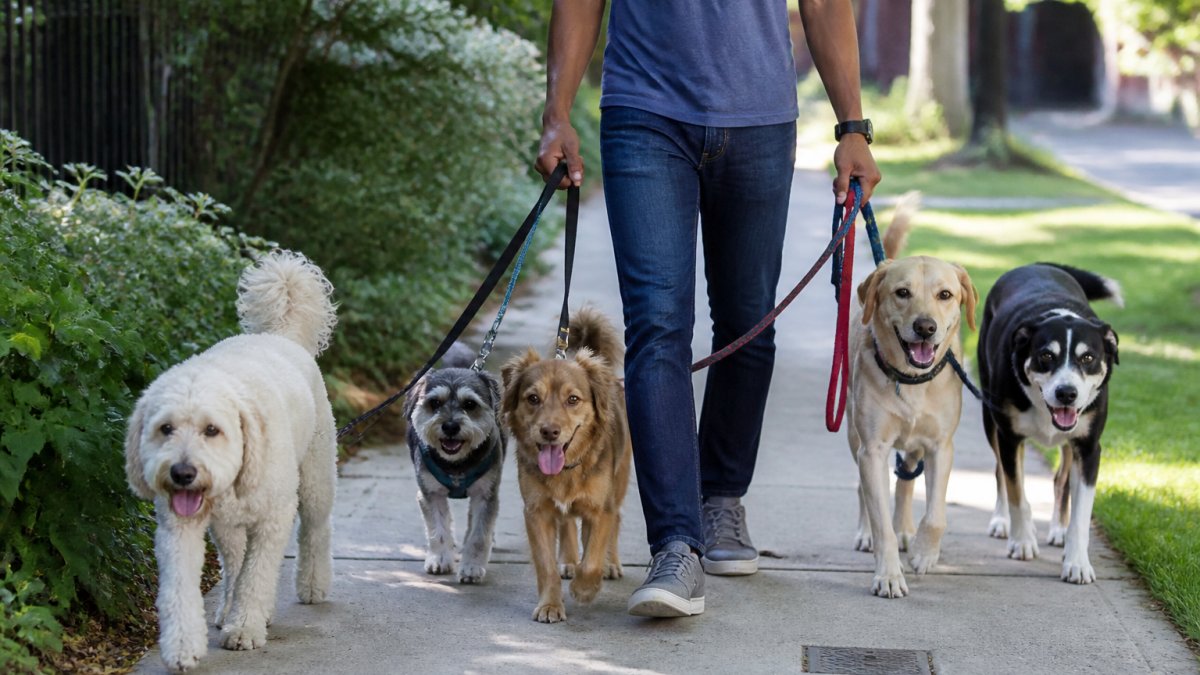
A dog walker for an unpredictable work schedule solves the hardest part: the last-minute gap.
Look for these traits when you hire:
On-call or same-day availability
Experience with anxious or reactive dogs
Steve the Dog Guy offers a flat rate for a 30-minute walk and stays on call 24/7/365, so a schedule change never leaves your dog waiting.
We're fully insured and bonded, and every walk is customized to your dog's needs. For Park West owners juggling rotating shifts, that reliability is the whole point.
Creating a Dog Care Backup Plan for Last-Minute Changes
A dog care backup plan is your safety net for the days everything falls apart. Most articles say "have a plan" but never tell you what to do at 5:40 a.m. when your shift moved and your walker just texted that they're sick. Build the plan before you need it: list everyone who could help, then rank them by how fast they can realistically show up:
A trusted neighbor or family member who already knows your pet
A backup dog walker on call (not your primary walker)
A nearby daycare or boarding option that accepts same-day drop-off
Who can you reach in 30 minutes? Who needs a day's notice? Who can only handle a potty break versus a full walk?
A Decision Tree for Genuinely Unpredictable Shifts
Rotating shifts, on-call weeks, and sudden travel don't fit a single plan, they need branches. Work through these in order:
1. How much time do you have before you leave?
More than 60 minutes: call your primary walker, then your backup. If neither answers, drop your pet at daycare on the way in.
30-60 minutes: skip the walker and use your on-call backup. A 30-minute walk beats a rushed 10-minute one.
Under 30 minutes: potty break only, then arrange a midday visit by text before you clock in.
2. How long will you actually be gone?
Under 6 hours: most adult dogs are fine with a potty break before you leave and one when you return.
6-10 hours: you need a midday visit. No exceptions for puppies, seniors, or dogs on medication.
Over 10 hours: split the day into two visits, or use boarding. A single long stretch is where accidents, destructive chewing, and stress behaviors spike.
3. Is this a one-off or a pattern?
One-off: use your fastest backup and reset tomorrow.
Pattern (three or more unpredictable days in a row): switch to a standing on-call arrangement so you're not re-solving the same problem daily.
4. What if your backup cancels?
This is why you line up two or three contacts, not one. If your primary and backup both fall through, your last resort is a same-day daycare drop-off or a neighbor who can at least let your dog out. Never let a single point of failure sit between your pet and a bathroom break.
Backup Care Options and Budget Tradeoffs
Every backup option trades cost against speed and reliability:
Option | Speed | Best For | Tradeoff |
On-call walker | Same day | Sudden shift changes | Needs advance setup and a standing relationship |
Neighbor or friend | Varies | Short gaps, potty breaks | Not always available; no backup if they travel |
Daycare | Same-day in some cases | Full workdays | Often requires booking; not ideal for anxious pets |
Pet sitter | 1-2 days notice | Overnight travel | Higher cost per visit |
Veterinary boarding | 1-2 days notice | Pets with medical needs | Highest cost; limited availability |
For rotating shifts, an on-call walker is usually the most flexible choice, it costs more than a neighbor's favor but far less than a stressed pet or treating a stress-related medical issue. We keep our pricing flat and simple, so you always know what a walk costs.
Watch Out Never rely on a single backup. If your only option falls through on a bad day, your pet pays the price. Line up two or three contacts and confirm they're still available at least once a month.
Key Takeaway A real backup plan isn't a list of names. It's a decision tree you can run in under two minutes when your shift changes without warning.
Managing Separation, Exercise, and Enrichment When You Work Late
Exercise and enrichment do more for separation anxiety than almost anything else, a tired, mentally engaged dog settles easier when you're gone. But "give them a puzzle toy" ignores that a puppy, a senior dog, and a cat need completely different things.
Species- and Age-Specific Enrichment
Puppies (under 6 months): Their alone-time tolerance is short, often 1-2 hours max. Enrichment should be short, supervised, and potty-timed.
Senior dogs: Shorter, gentler walks and more frequent potty breaks. Cognitive enrichment, scent games, easy food puzzles, matters more than physical exertion.
Cats: They handle alone time better than dogs, but still need daily interaction.
Pets with medical needs: Medication timing can't flex the way a walk can.
Recognizing Stress and Behavior Changes
Watch your pet's body language and daily habits. Small changes often show up before big problems do.
Warning signs to track:
Pacing, drooling, or trembling when you grab your keys
Loss of appetite or sudden picky eating
Increased barking, howling, or destructive chewing
A Simple Welfare Log
Patterns beat memory. Keep a five-column log for two weeks, a notebook or phone note is fine:
Date | Meals eaten | Potty breaks | Activity | Alone time | Behavior notes |
Fill it in once a day. After two weeks, you'll see whether stress signs cluster around specific shift patterns, long days, early starts, consecutive nights, instead of guessing.
When to Seek Professional Help
Routine changes and enrichment solve most mild stress. But some signs warrant more than a schedule tweak:
Separation-related distress that doesn't improve after two to three weeks of consistent routine and enrichment
Self-injury, chewing or scratching to the point of bleeding, broken teeth, or hair loss
Persistent appetite loss lasting more than 48 hours
Start with your veterinarian. They can rule out medical causes, thyroid issues, dental pain, and arthritis all mimic anxiety, and refer you to a qualified behavior professional if needed. The ASPCA's guide to dog separation anxiety is a solid starting point for understanding what's normal and what isn't.
Pro Tip If your pet's stress signs spike only on your longest shifts, the fix is usually more midday coverage, not more toys. Log the pattern first, then adjust care.
Conclusion
An unpredictable schedule doesn't have to mean an unpredictable pet. Build fixed anchors, adjust gradually, and set up a backup plan before you need one.
Steve the Dog Guy offers a flat rate for a 30-minute walk, on-call availability 24/7/365, and walks customized to your dog's needs.
Get started with Bark West and give your pet steady care, no matter what your week throws at you.
Frequently Asked Questions
Can I leave my dog for 9 hours while at work?
Most adult dogs can hold their bladder for 8 to 10 hours, but that is the physical limit, not a good daily plan. Nine hours alone means no potty break, no exercise, and no social contact for most of the day. If your shift regularly runs long, arrange a midday walk. A 30-minute visit breaks up the day, gives your dog a chance to relieve itself, and prevents the boredom that leads to chewing or barking.
How can I keep my dog on a routine when my work schedule changes?
Anchor your dog's day to fixed events rather than fixed clock times. Feed at roughly the same points in the day, keep the first morning walk consistent, and preserve a wind-down period before bed. When your shift changes, move one thing at a time, such as the midday walk, and hold everything else steady for a few days. Predictability comes from the order of events, not exact minutes.
Should I hire a dog walker if my work hours are unpredictable?
Yes, if your schedule regularly keeps you away longer than 8 hours or changes week to week. A walker for an unpredictable work schedule gives you a reliable fallback when a meeting runs late or a shift gets extended. Look for someone with on-call availability, clear cancellation terms, and a flat rate you can budget for. Confirm they serve your specific neighborhood before you commit.
What backup care should I arrange for my dog?
Build a dog care backup plan with three layers: a primary walker you use most days, an on-call service for last-minute needs, and a neighbor or friend with a spare key. Share your vet's contact information and feeding instructions with everyone on the list. Test the backup once before you need it, so your dog has met the person and you know the arrangement works.
Contact

Comments